

The Spike Volleyball Story Tournament Strategies: How to Win Every Trophy (2026 Guide)
The Spike Volleyball Story tournament strategies are what separate a quick trophy run from endless restarts. If you have played the game for any real length of time, you already know where the difficulty spikes. Story mode eases you in, but Tournament Mode is where the game stops holding your hand. You do not just win one match here; you have to beat three full teams back to back, with no second chances, to actually lift the trophy
If you have played The Spike Volleyball Story for any real length of time, you already know where the difficulty spikes. Story mode eases you in, but Tournament Mode is where the game stops holding your hand. You do not just win one match here; you have to beat three full teams back to back, with no second chances, to actually lift the trophy.
How Tournament Mode Works in The Spike Volleyball Story
Discover the best strategies for winning in Tournament Mode in The Spike Volleyball Story team builds, stat splits, and tactics to beat all 3 teams.
Tournament Mode in The Spike Volleyball Story, developed by DAERISOFT, is a knockout bracket. You face three opponent teams in sequence, and each round is harder than the last. Lose a single match, and the run ends; you start over from the first team. This is the core reason tournaments feel so punishing compared to the forgiving pace of story mode.
full gameplay features and modes. Because it is a bracket, momentum matters more than raw talent. A team that is “good enough” for story stages will often stall against the second or third tournament opponent, where the AI blocks sharper and reacts faster. Treating every round as a separate fight, rather than coasting on early leads, is the mindset that carries most players through.
Tournament format and bracket explained
Each tournament round is a standard 3v3 volleyball match played to a set score. You control one player on the court from start to finish while the AI handles your two teammates. The opponent teams climb in rank as you advance, so the third match is effectively a difficulty wall designed to test a fully built roster.
The single most important thing to understand is the no-mercy structure. There is no “best of three” cushion inside a round and no checkpoint between rounds. That means consistency beats brilliance — a steady, well-drilled team will outperform a flashy but fragile one almost every time.
Rewards, volleyballs, players, and why it is worth grinding
Winning tournament rounds pays out volleyballs, the premium currency you need to recruit stronger players and unlock costumes. Volleyballs are deliberately scarce, and tournaments are one of the most reliable repeatable sources once you can clear them consistently. That makes the mode a long-term investment, not just a one-time challenge.
The payoff loop is simple: clear tournaments, earn volleyballs, recruit elite and legendary players, then clear harder tournaments faster. Players who skip Tournament Mode tend to plateau because they cut off their best currency pipeline. Even an imperfect run that clears one or two rounds is worth doing regularly.
Building the Best Team for Tournament Mode

Your roster is decided before the whistle, so team building is genuinely half the battle. Most losing runs trace back to a lineup problem, not a skill problem. The goal is a balanced team that can score, defend, and survive a long rally without one weak position dragging the whole unit down.
Ideal lineup — spiker, blocker, setter, and all-rounder balance
A strong tournament team covers three jobs: a reliable scorer, a wall at the net, and a setter who feeds clean balls. In a 3v3 format, you cannot afford a passenger, so every player on the court should contribute something measurable. Stacking three pure spikers feels powerful, but collapses the moment you face a team that blocks well.
The safest build is one specialist spiker for power, one strong middle blocker to shut down the net, and an all-rounder who can set, receive, and cover gaps. This spread keeps you competitive whether the rally turns into an attacking shootout or a grinding defensive exchange.
Recruiting elite and legendary players with volleyballs
You start with basic-grade players, and their stat ceilings are simply too low for the third tournament round. Spend volleyballs to recruit elite and, eventually, legendary-grade players, because higher rarity means a higher stat cap — not just better starting numbers. That ceiling is what lets a player keep scaling as opponents get tougher.
Recruit with intent rather than impulse. Before spending, decide which position you are weakest at and fill that hole first. A single well-placed legendary blocker often does more for your tournament run than three random recruits, so save volleyballs until you can target the gap that keeps costing you matches.
Best stat distribution for tournament play
When you upgrade players, prioritize the stats that decide rallies. For your main scorer, push spike power and jump or timing-related stats first, since a blocked or out-of-bounds spike hands the opponent a free point. For your blocker, block height and reaction matter most. For your setter and all-rounder, receive and serve accuracy come first.
A practical rule of thumb: spend roughly 60% of your upgrade resources on each player’s primary role stat and split the rest across their support stats. Avoid spreading points evenly across everything — a “balanced” player with no standout strength is exactly the kind of soft spot the third opponent exploits.
The table below shows which stats to prioritize for each position so you can plan your upgrades at a glance before entering a tournament:
| Position | Priority Stat (upgrade first) | Secondary Stats | Why It Matters in Tournaments |
| Specialist Spiker | Spike Power | Jump / Timing, Speed | Converts rallies into points and breaks through aggressive blockers in later rounds. |
| Middle Blocker | Block | Reaction, Height | Shuts down the net and swings momentum back to your side on defense. |
| Setter / All-Rounder | Receive | Serve Accuracy, Speed | Clean first touches let you set proper attacks instead of wasting rallies. |
| Whole Team (baseline) | Stamina / Speed | — | Keeps players sharp through long, three-round tournament brackets. |
Use this as your upgrade checklist: lock in each player’s priority stat first, then top up their secondary stats only once the main one is strong.
Pre-Tournament Checklist (Do This Before You Enter)
Run through this short list before every tournament attempt, and you will avoid the most common preventable losses:
- Fully upgrade your starting three with the resources you currently have — never enter with unspent upgrade materials sitting idle.
- Confirm your lineup covers all three jobs — scoring, blocking, and setting — with no empty role.
- Recruit or slot in your highest-grade available player at your weakest position.
- Switch off Auto Mode and Beginner Mode, so you have full manual control when it counts.
- Play two or three practice matches first to warm up your timing before the bracket begins.
Skipping this checklist is how strong rosters lose to weaker ones. Two minutes of preparation routinely saves a full failed run.
In-Match Tournament Strategies That Actually Win
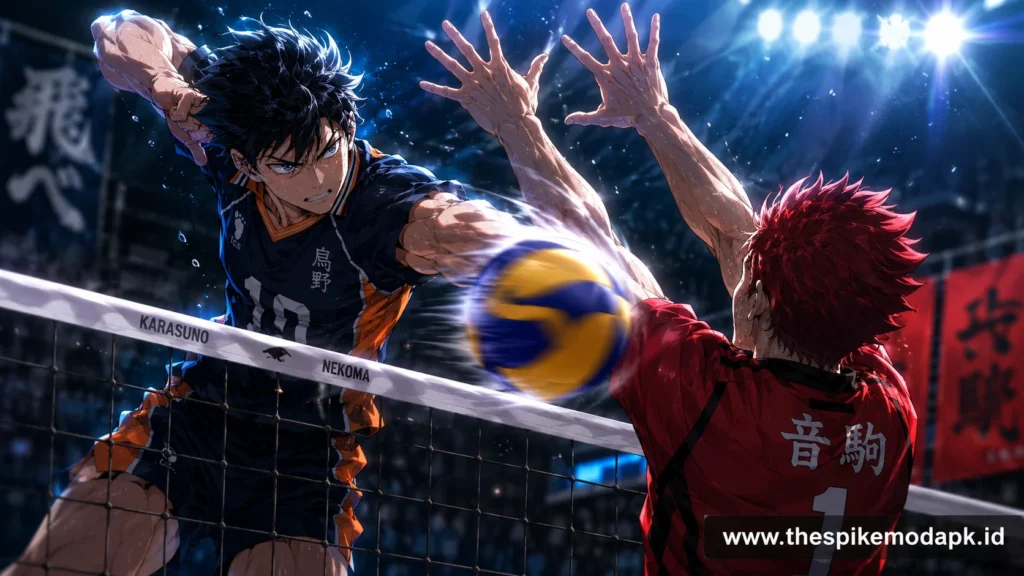
A good roster gets you to the court, but the match itself is won by what you do with the ball. These are the in-game habits that separate players who clear tournaments from players who keep restarting at round two.
Manual mode vs Auto mode — when to switch
Basic controls and manual mode are fine for early story stages, but they will quietly cap your progress in tournaments. The AI plays it safe, takes predictable shots, and cannot read an opponent’s defense the way you can. Leaning on automation against ranked tournament teams is one of the most common reasons skilled players still lose.
Turn both modes off before you enter Tournament Mode. Manual control lets you place spikes into open court, time blocks against specific attacks, and adapt mid-rally. It feels harder for the first few matches, but it is the single biggest skill upgrade available to you, and it pays off immediately against tougher brackets.
The Spike Volleyball Story tournament strategies Spike timing quick spikes vs power spikes
Spiking in The Spike Volleyball Story is about variety, not just force. A power spike scores when the lane is open, but a predictable attacker gets read and blocked every rally. Mixing in quick spikes — faster, lower attacks that beat a blocker’s reaction — keeps the opposing defense guessing and off balance.
The timing principle is to strike the ball at the peak of your jump, not on the way up or down. Hitting at the apex gives you the steepest angle and the most power. During tight tournament rallies, alternate quick and power spikes so the AI never settles into a blocking rhythm against you.
Blocking and reading the opponent’s attack
Defense wins tournament rounds just as often as attacking does. A well-timed block does double duty: it stops a point and shifts momentum onto your side. The skill is anticipation — watch where the opponent’s setter sends the ball and move your blocker into that lane before the spike, not after.
Do not jump on every attack. Reckless blocking leaves the court exposed for the next rally. Read the setup, commit to blocks you can realistically reach, and let your receivers handle the rest. Against the third tournament team, especially, disciplined blocking is what keeps a close match from slipping away.
Serving and receiving under pressure
Your serve is a free chance to take control of the rally before it even starts. A flat, predictable serve gives the opponent an easy reception, so vary your placement and aim toward gaps in their formation. A serve that forces a sloppy receive often hands you the initiative for the whole point.
Receiving is the other half of the equation. A clean first touch lets your setter feed a proper ball; a panicked one leads straight to a wasted rally. Stay calm, position early under the incoming ball, and treat every solid receive as the foundation of your next attack.
How to Beat All 3 Teams (Round-by-Round Tactics)

File name
Treat the bracket as three distinct challenges with their own pacing. Adjusting your approach per round is what turns a stalled run into a trophy.
Round 1 — establish rhythm. The first opponent is the easiest, so use it to settle your timing rather than showing off. Score with safe, well-placed spikes, lock in your jump timing, and finish the round without burning energy on risky plays. Walk into Round 2 calm and warmed up.
Round 2 — adapt and apply pressure. This is where most runs end. The AI blocks more aggressively here, so this is the round to commit fully to mixing quick and power spikes. Start serving into their weak spots, tighten your blocking, and refuse to coast on any early lead — the second team punishes complacency.
Round 3 — execute everything cleanly. The final team is built to expose a flawed roster, so there is no new trick here — only flawless basics. Play every rally deliberately, keep your spike variety unpredictable, block with discipline, and trust the team you built. If your preparation was solid, this round confirms it.
Common Tournament Mistakes to Avoid
A handful of repeated errors account for most failed tournament runs:
- Relying on Auto Mode against ranked teams that out-read the AI.
- Stacking pure spikers with no real blocker or setter, leaving defensive holes.
- Spreading upgrades evenly so no player has a genuine strength.
- Spiking predictably — same shot, same timing — until the AI blocks every attack.
- Entering with a story-mode roster that has not been upgraded for the tougher brackets.
- Giving up after one loss instead of treating each run as practice toward the next.
Fix these and your win rate climbs immediately — most players are losing to their own habits, not to the opponents. The Spike community on Reddit
Frequently Asked Questions
How do you win Tournament Mode in The Spike Volleyball Story?
Win Tournament Mode by entering with a balanced, fully upgraded team — one spiker, one blocker, one all-rounder. Switch off Auto Mode for full manual control, mix quick and power spikes to beat blockers, and play each of the three rounds as its own fight without coasting on early leads. Or playing The Spike on iOS
How many teams do you have to beat in a tournament?
You must beat three opponent teams in a row to win the trophy. The bracket is a knockout format with no checkpoints, so a single loss ends the run and sends you back to the first team. Each round is harder than the last.
What is the best team for tournaments in The Spike Volleyball Story?
The best tournament team balances three roles: a specialist spiker for scoring, a strong middle blocker to control the net, and an all-rounder who can set and receive. Avoid stacking pure spikers, since that build collapses against teams that block well.
Should I use Auto Mode in tournaments?
No. Auto Mode plays safe, predictable shots and cannot read opponent defenses, which caps your progress against ranked tournament teams. Turn off Auto Mode and Beginner Mode before entering, and play manually so you can place spikes, time blocks, and adapt mid-rally.
How do you get volleyballs fast in The Spike Volleyball Story?
Winning tournament rounds is one of the most reliable repeatable sources of volleyballs, the game’s premium currency. You also earn them from three-star story stages for the first time. Reinvest volleyballs into elite and legendary players to clear harder tournaments faster.
Why do I keep losing in the second tournament round?
Round 2 is where the AI starts blocking aggressively, so a predictable, single-shot attacker gets shut down. Beat it by mixing quick and powerful spikes, serving into the opponent’s weak spots, blocking with discipline, and making sure your roster is fully upgraded before you enter.
Conclusion
Tournament Mode is not unfair, it is just honest. It exposes every shortcut you took in story mode, from an unbalanced roster to a reliance on Auto Mode and a single predictable spike. Fix those, and the same bracket that kept beating you suddenly becomes a steady source of volleyballs and stronger players.
Build a balanced team, upgrade with intent, play manually, vary your attacks, and treat all three rounds as separate fights. Do that consistently, and the trophy stops being a lucky run — it becomes the expected result. Now load up The Spike Volleyball Story, switch off Auto Mode, and go win your next tournament.